Last updated: 2026-10-10
South Carolina Plumbing is a referral service that connects South Carolina homeowners and property managers with participating independent plumbers for drain cleaning. This page explains what causes clogs, how plumbers clear them, and when a clog is really a sewer line problem.
Branch clog or main line clog?
Where the clog is decides who should fix it and how urgent it is.
A branch line clog affects one fixture: a kitchen sink, a single tub, one toilet. It's usually hair, soap, food, or grease close to the fixture, and a plunger or hand auger often clears it.
A main line clog affects the pipe that carries everything out of the house. Signs include several drains slowing at once, toilets gurgling when a sink drains, and water backing up into the lowest drain in the house, often a shower or floor drain. That needs a plumber, and if wastewater is coming up, it's an emergency.
What causes clogs
- Grease and food in kitchen drains. Fats cool and harden inside pipes.
- Hair and soap in bathroom drains.
- Wipes, paper towels, and hygiene products in toilets. "Flushable" wipes don't break down like toilet paper.
- Tree roots entering cracked or separated joints in clay, cast-iron, or fiber sewer pipe, common in older South Carolina neighborhoods.
- Pipe problems: sagging sections that hold water, collapsed pipe, or old cast iron scaled inside.
How plumbers clear drains
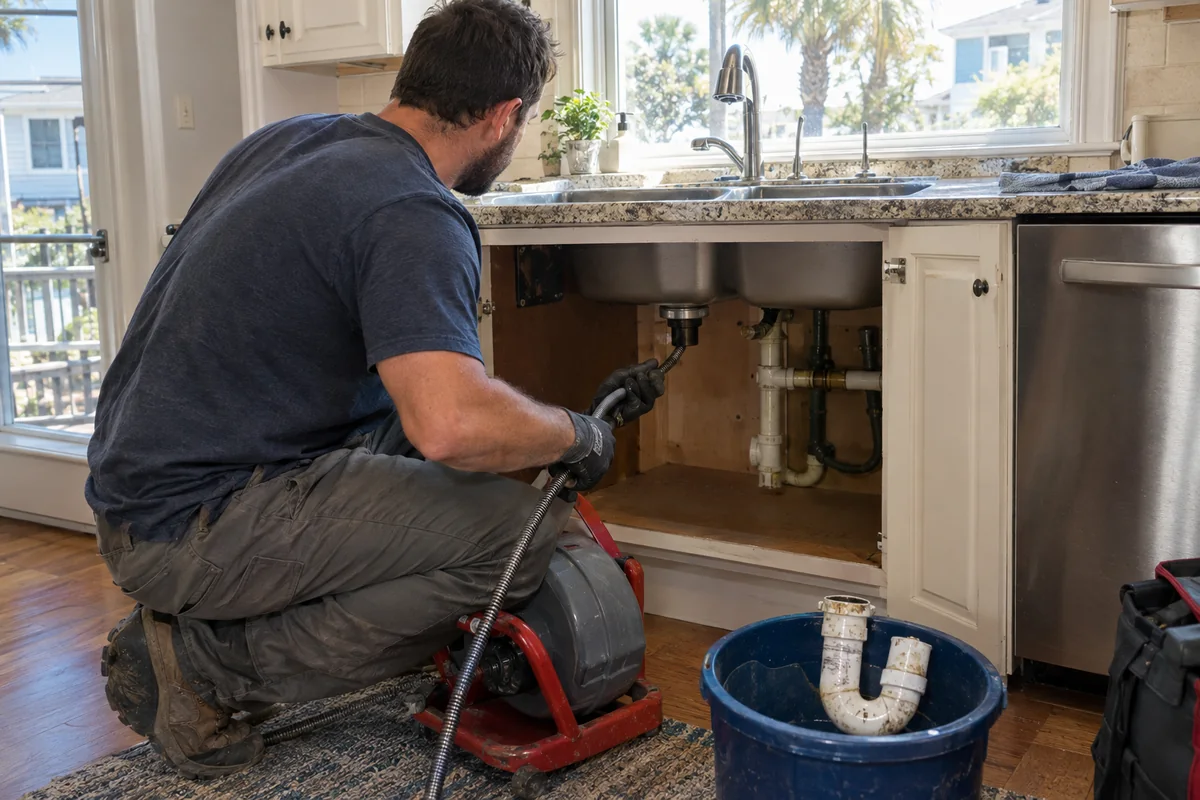
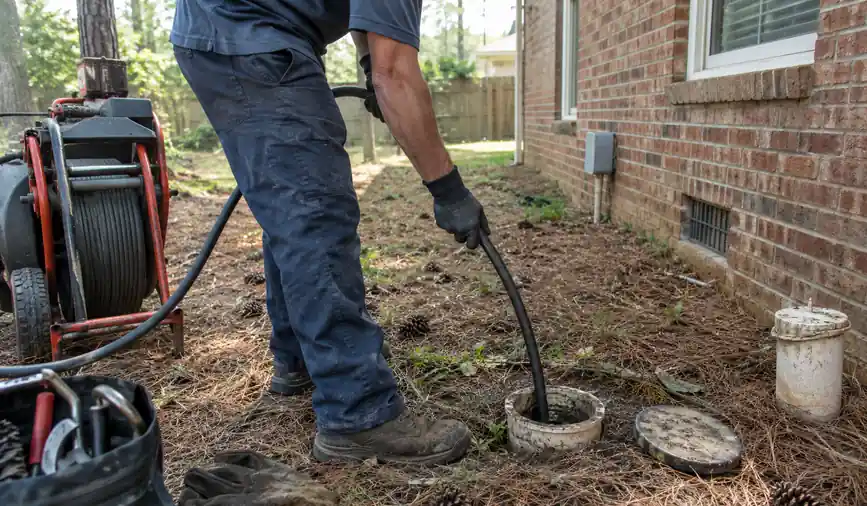
- Cable machines (augers or snakes) bore through clogs and cut roots. The standard tool for most clogs.
- Hydro jetting uses high-pressure water to scour grease, scale, and roots off pipe walls. Useful for recurring clogs and grease buildup, but not for fragile or damaged pipe.
- Camera inspection runs a waterproof camera down the line to find roots, breaks, or sags. Worth it when clogs keep coming back, before you pay for a sewer repair.
When to call a plumber
- More than one drain is slow or backing up
- Toilets gurgle or bubble when other fixtures drain
- Water or sewage comes up in a tub, shower, or floor drain
- A clog keeps coming back after you clear it
- You smell sewage inside or near the cleanout outside
- A plunger and hand auger haven't worked
What drain cleaning costs
HomeAdvisor's 2026 data puts drain cleaning at $95 to $500 (HomeAdvisor, 2026). A simple sink or tub clog sits at the low end. Main line cleaning from an outdoor cleanout, hydro jetting, and camera inspections cost more.
- Branch line versus main line
- Access: an outdoor cleanout is easier than pulling a toilet to reach the line
- Method: cable, hydro jetting, and camera inspection
- After-hours service
Safety and what to do while you wait
- For a main line backup, stop using water: no flushing, showers, laundry, or dishwasher until it's cleared.
- Skip chemical drain cleaners on a full clog. They can damage old pipe and splash on whoever works on the drain next. Tell the plumber if you used one.
- Keep children and pets away from any sewage backup, and wear gloves if you must touch it.
- Find your sewer cleanout, usually a capped pipe in the yard near the house, so the plumber can get to it quickly.
Questions to ask the plumber
- Is your South Carolina plumbing license current? (Check it free on the SC LLR license lookup.)
- What's the service call fee, and is it credited toward the repair?
- Will you give me the price in writing before you start?
- Will you clear it from the cleanout or through a fixture?
- Do you recommend a camera inspection, and what does it cost?
- If roots are the problem, what are my repair options?