
Last updated: 2026-10-10
South Carolina Plumbing is a referral service that connects South Carolina homeowners and property managers with participating independent plumbers for leak detection and repair. This page covers the warning signs of hidden leaks, a simple meter test you can do yourself, and how professionals pinpoint leaks.
Signs of a hidden leak
- A water bill that jumps with no change in use
- The sound of running water when every fixture is off
- Warm spots on a floor, a sign of a hot-water line leaking under a slab
- Damp, stained, or bubbling drywall, or a musty smell
- Cracks in a slab or tile floor, or flooring that lifts
- A soggy patch in the yard, or grass that stays green in one strip
Test for a leak with your water meter
You can often confirm a leak before calling anyone:
- Turn off every faucet, appliance, and irrigation zone in and around the house.
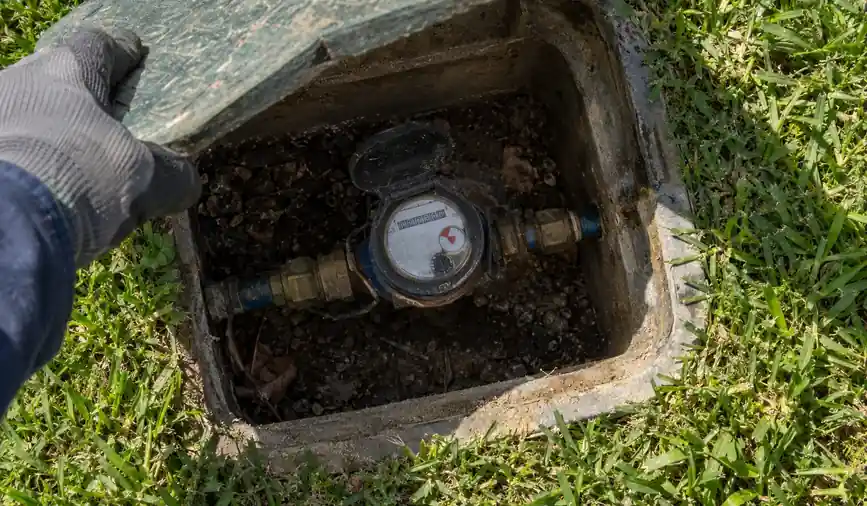
- Find your water meter, usually in a box near the street, and look at the dial or the small leak indicator (often a triangle or star).
- If it's moving, water is going somewhere. Wait 30 minutes and check again if the meter has no leak indicator.
- Close the main shutoff at the house. If the meter stops, the leak is inside the house; if it keeps moving, it's in the service line between the meter and the house.
How plumbers find leaks
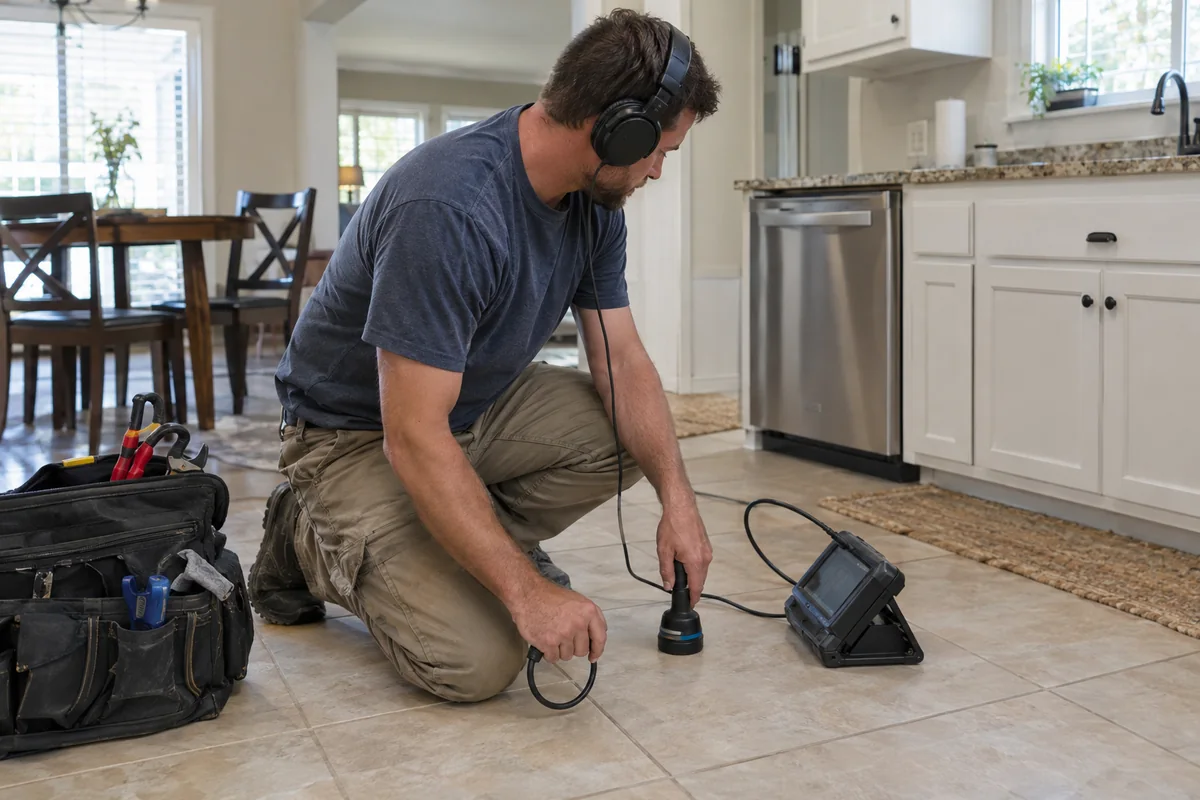
Modern leak detection is about finding the leak before opening anything up. Plumbers use acoustic listening equipment to hear water escaping under floors and in walls, thermal imaging to spot temperature differences from hot-water leaks, pressure testing to isolate which line is leaking, and moisture meters to map wet areas.
Slab leaks, common in the many South Carolina homes built on concrete slabs, are repaired in one of three ways: a spot repair through the slab, rerouting the line through walls or the attic, or, for repeated failures, repiping.
When to call a plumber
- Your meter moves with every fixture turned off
- You hear water running inside walls or under floors
- There's a warm spot on the floor
- Ceiling or wall stains are growing
- Your bill jumped and you can't find the cause
- Water is pooling in the yard along the service line
What leak detection and repair cost
Leak detection is usually priced as a diagnostic visit, and the repair is quoted after the leak is found. For reference, HomeAdvisor's 2026 data puts burst pipe repairs at $200 to $3,000 depending on access (HomeAdvisor, 2026). Slab leaks and leaks behind finished walls sit at the high end because the structure has to be opened and restored.
- How hard the leak is to locate
- Location: exposed pipe, wall, ceiling, or under a slab
- Repair method: spot repair, reroute, or repipe
- Drywall, flooring, or concrete restoration afterward, which is often a separate trade
Safety and what to do while you wait
- Do the meter test above so you can tell the plumber whether the leak is inside or outside.
- If water is visibly leaking, close the main shutoff.
- Turn off the water heater if you suspect a hot-water leak and the main will be off.
- Photograph stains and wet areas and check your homeowners policy; sudden leaks are often covered, slow ones often aren't.
- Check your utility's usage data if your meter is read electronically; it can show when the leak started.
Questions to ask the plumber
- Is your South Carolina plumbing license current? (Check it free on the SC LLR license lookup.)
- What's the service call fee, and is it credited toward the repair?
- Will you give me the price in writing before you start?
- How will you find the leak, and what does detection cost on its own?
- For a slab leak, do you recommend a spot repair or a reroute, and why?
- Who restores the drywall, flooring, or concrete afterward?