Decision Guide
What are the warning signs of a sewer line problem?
The warning signs of a failing sewer line: multiple slow drains, gurgling toilets, sewage smells, backups, and soggy spots in the yard. Causes, who's responsible, and next steps.
The clearest signs are several drains slowing or backing up at the same time, toilets gurgling when other fixtures drain, sewage coming up in a tub, shower, or floor drain, sewage smells inside or in the yard, and a soggy or unusually green strip of lawn over the line. A plumber's camera inspection confirms the cause.
Published 2026-10-10 · Updated 2026-10-10
South Carolina Plumbing is a referral service that connects South Carolina homeowners with participating independent plumbers. A sewer line problem rarely appears overnight. It usually gives warnings first, and catching them early is the difference between a cleaning and an excavation.
The warning signs
Inside the house
- Several drains slow at once. One slow sink is a local clog; slow sinks, tubs, and toilets together point to the main line.
- Gurgling toilets. Bubbling or gurgling when a sink, tub, or washing machine drains means air is being pushed through a restriction.
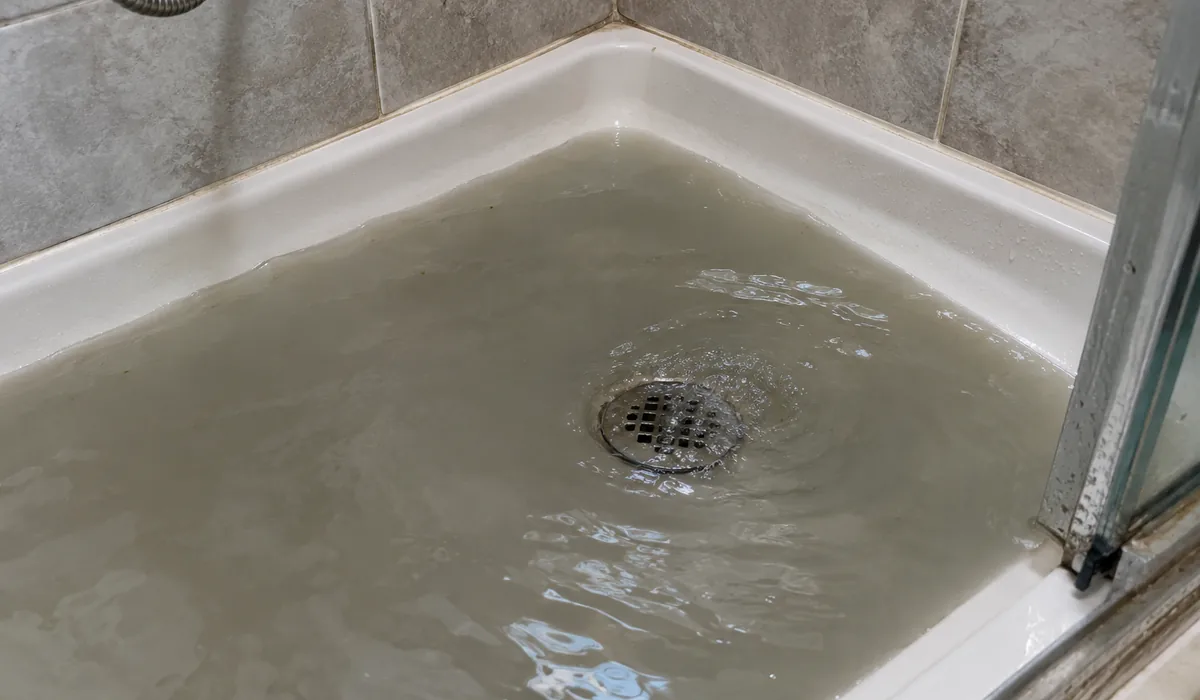
- Backups in the lowest drain. Sewage or dirty water coming up in a shower, tub, or floor drain, often when the washing machine or dishwasher drains.
- Sewage smell. A persistent sewer odor indoors, especially near floor drains.
- Recurring clogs. Drains that clog again weeks after being cleared.
Outside
- Soggy or sunken spots in the yard along the path of the sewer line.
- An unusually green, lush strip of grass over the line, fed by leaking sewage.
- Sewage smell near the cleanout or in the yard.
- Overflow at the cleanout, the capped pipe in the yard near the house.
Signs it may not be your line
If neighbors are backing up at the same time, or backups happen during heavy rain across the neighborhood, the problem may be in the public sewer main. Report it to your sewer utility.
What causes sewer line failures
- Tree roots entering cracks and loose joints in search of water.
- Old pipe materials. Clay, cast iron, and fiber (Orangeburg) pipe common in older South Carolina homes crack, corrode, and collapse. In Greenville’s Mills Mill village, century-old clay sewer pipe had cracked badly enough that the sewer district is spending about $13 million to replace it (Greenville Journal).
- Bellies, sagging sections where the soil settled.
- Grease and wipes that build up into blockages.
- Rain and groundwater. Cracked laterals let water in, and heavy rain overloads parts of some systems. In Charleston, more than half of 176 sewer overflows since 2015 were storm or rain triggered, according to a February 2026 settlement (SELC).
What to do
- If sewage is backing up, stop using water: no flushing, showers, laundry, or dishwasher.
- Keep everyone away from sewage, and wear gloves if you must touch anything it reached.
- Find your outdoor cleanout so a plumber can access the line.
- Call a plumber for a camera inspection. It shows exactly where the problem is (roots, a crack, a sag, a collapse) and whether it’s on your side or the utility’s.
- Check your insurance. Sewage backup damage is often covered only with a water backup endorsement, and wear on the line itself is usually excluded.
Repair options
Depending on what the camera finds:
- Cleaning: cable machines cut roots; hydro jetting scours grease and scale.
- Spot repair of a single broken section.
- Trenchless repair: pipe lining, which cures a resin liner inside the old pipe, or pipe bursting, which pulls new pipe through the old.
- Excavation and replacement for collapsed or badly damaged lines.
HomeAdvisor’s 2026 data puts sewer line repair at $1,390 to $5,300 (HomeAdvisor). Replacements usually need a permit. See sewer line repair and drain cleaning for details.
Buying an older home?
A sewer camera inspection before closing is one of the best-value checks you can order on an older South Carolina home. A standard home inspection usually doesn’t include it.
The bottom line
If you have a plumbing problem now, call (843) 459-7066 and we'll try to connect you with a participating independent plumber who serves your area. That plumber diagnoses the problem and quotes the job themselves.