
Skip to content

Independent referral service: calls connect you with participating South Carolina plumbing professionals. How it works

South Carolina Plumbing

Sewer laterals and main lines

Sewer Line Repair in South Carolina

Recurring backups, sewage smells, and soggy spots in the yard often trace back to the pipe between your house and the street. What goes wrong, how it's diagnosed, and what repairs cost.

(843) 459-7066 · Referral to a participating independent plumber

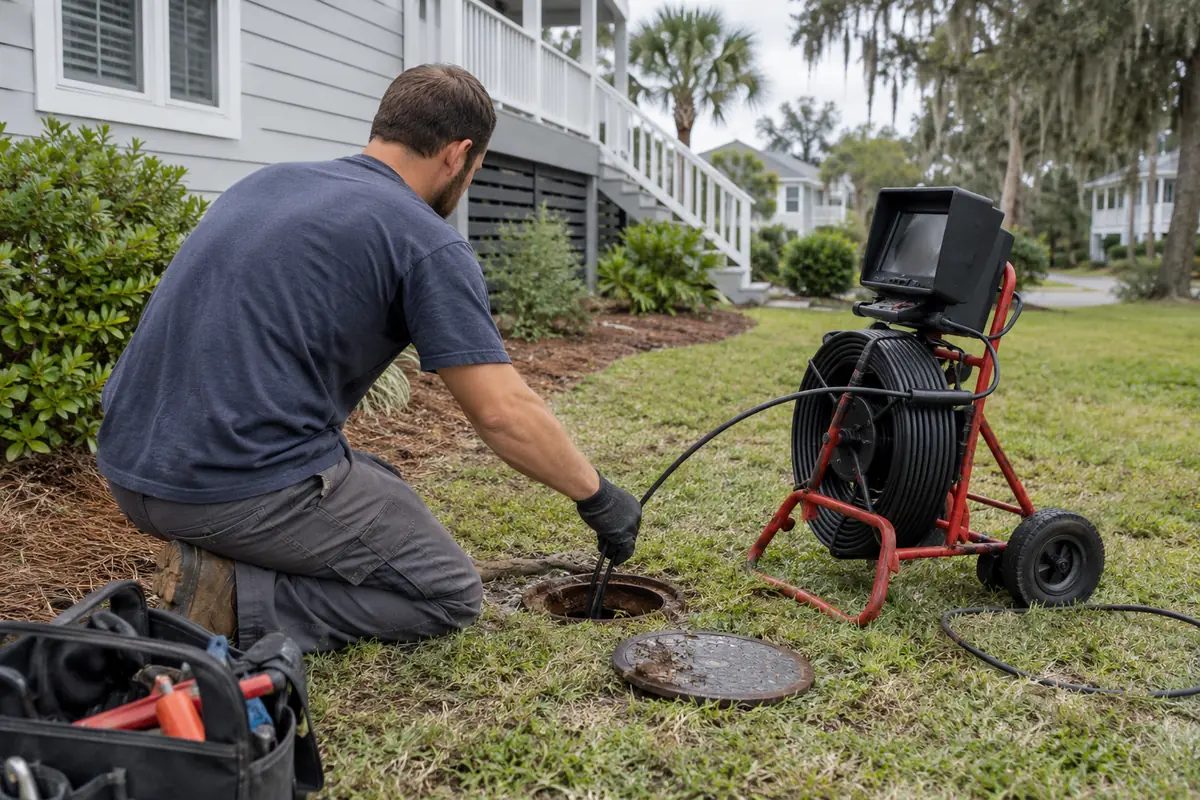
Plumber watching a sewer camera monitor at an outdoor cleanout

Last updated: 2026-10-10

South Carolina Plumbing is a referral service that connects South Carolina homeowners and property managers with participating independent plumbers for sewer line repair. Not every participating plumber does sewer replacement work, so confirm when you're connected. This page covers the warning signs, the repair options, and who's responsible for which section of pipe.

Who owns the sewer line?

The pipe that runs from your house to the public sewer main is called the sewer lateral. In most places, including most South Carolina utilities, the property owner is responsible for maintaining and repairing it; the utility owns the main in the street. Exactly where your responsibility ends varies by utility, so check with yours.

Some utilities are starting to help. In a February 2026 settlement with Charleston Waterkeeper over sewer overflows, Charleston Water System committed to recommending a grant program to help homeowners repair or replace leaking private sewer laterals, with proposed funding of $50,000 a year for five years (SELC).

Why sewer lines fail

  • Tree roots find cracks and loose joints and grow into the pipe.
  • Old pipe materials. Clay, cast iron, and fiber (Orangeburg) sewer pipe were common in older homes and are prone to cracking, corrosion, and collapse. In Greenville's Mills Mill village, sewer lines are clay pipe more than 100 years old, and the local sewer district is spending about $13 million to replace them (Greenville Journal).
  • Bellies: sagging sections where soil settled, which hold water and waste.
  • Grease and wipes building up into recurring blockages.
  • Ground movement and heavy vehicles over the line.

How sewer problems are diagnosed and repaired

A camera inspection is the starting point. A plumber runs a waterproof camera through the line from a cleanout and records where roots, cracks, bellies, or breaks are and how deep the pipe is. Ask for the recording.

Repairs range from cutting roots and jetting the line, to a spot repair of one section, to trenchless methods such as pipe lining (a resin liner cured inside the old pipe) or pipe bursting (pulling new pipe through the old one), to full excavation and replacement. Sewer replacements usually require a permit.

When to call a plumber

  • Several drains back up or slow down at the same time
  • Sewage comes up through a floor drain, shower, or lower toilet
  • You smell sewage indoors or in the yard
  • A soggy, sunken, or unusually green patch appears over the sewer line
  • Clogs keep returning after drain cleaning
  • You're buying an older home: a sewer camera inspection is worth considering

What sewer line repair costs

HomeAdvisor's 2026 data puts sewer line repair at $1,390 to $5,300 (HomeAdvisor, 2026). Root cutting and camera inspections cost far less; full replacement of a long or deep line costs more.

  • Length and depth of the line
  • Repair method: spot repair, lining, bursting, or excavation
  • What's on top: lawn, driveway, landscaping, or a slab
  • Permits and any required connection work at the main
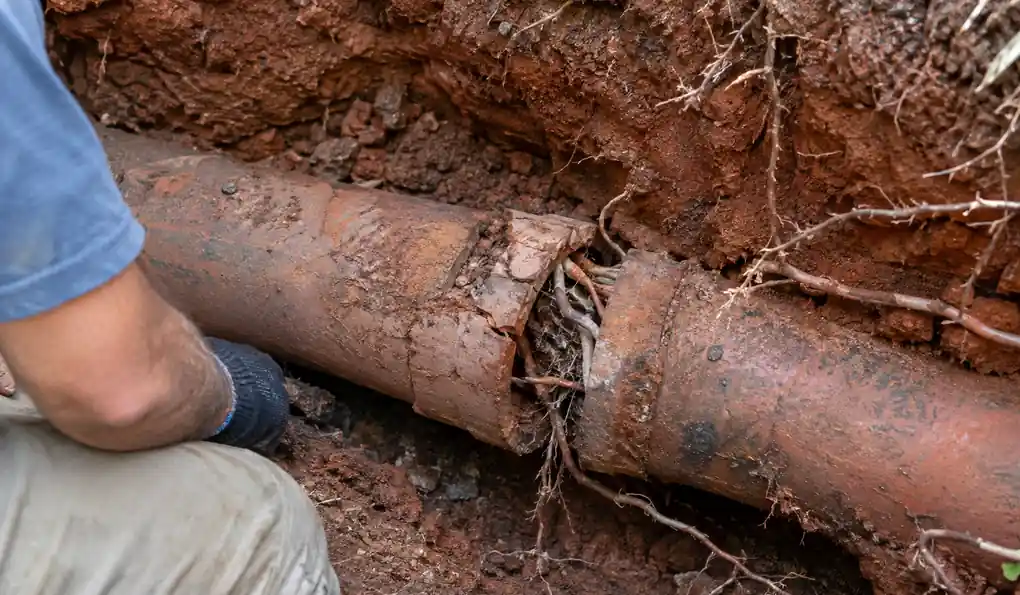
Excavated section of old clay sewer pipe with tree roots in the joint

Safety and what to do while you wait

  1. Stop using water if sewage is backing up: no flushing, showers, laundry, or dishwasher.
  2. Keep everyone away from sewage and wear gloves if you have to touch anything it reached.
  3. Find the outdoor cleanout so the plumber can access the line.
  4. Call your sewer utility if neighbors are backing up too; the problem may be in the public main.
  5. Photograph any damage for insurance. Sewer backup is often covered only by a specific endorsement.

Questions to ask the plumber

  • Is your South Carolina plumbing license current? (Check it free on the SC LLR license lookup.)
  • What's the service call fee, and is it credited toward the repair?
  • Will you give me the price in writing before you start?
  • Can I see the camera inspection video?
  • Is the problem on my side or the utility's side?
  • Is trenchless repair an option for my line, and what's the warranty?
  • Does this job need a permit, and will you pull it?

Related plumbing guides

Straight comparison

DIY fix or call a plumber?

ProblemOften DIY-friendlyCall a licensed plumber
Clogged drainOne slow sink or tub: plunger or hand augerSeveral drains slow at once, gurgling, or sewage backing up: likely a main line problem
Running toiletFlapper or fill valve swapCracked tank or bowl, leaks at the base, or a toilet that needs resetting
Dripping faucetCartridge or washer replacementCorroded valves behind the wall, or a shutoff that will not close
Water heaterRelighting a gas pilot per the label, flushing sedimentLeaking tank, gas smell, tripping breaker, or a relief valve that keeps discharging
LeaksA loose compression nut under a sinkHidden leaks, wet walls or ceilings, a running meter with everything off, warm spots on a slab floor
Sewer lineNot DIYCamera inspection, root cutting, repair or replacement, and any required permit

South Carolina requires a licensed plumber for residential plumbing work over $500.

What to expect

What to expect when a plumber comes out

  1. Diagnosis

    The plumber finds the source of the problem: the failed part, the location of the clog or leak, or the reason the water heater stopped working. Expect questions about when it started and what you have noticed.

  2. Written price before work

    A good plumber explains what is wrong and gives you a price, either flat-rate or time and materials, before starting. Ask what is included and what could change it.

  3. Repair or replacement

    The plumber makes the repair, replaces the failed part, or, for bigger jobs like a water heater or sewer line, schedules the work and pulls any required permit.

  4. Testing

    Water is turned back on and the repair is checked for leaks, drainage, pressure, or hot water, depending on the job.

  5. Paperwork

    You get an invoice that lists the work and parts. Keep it, along with any warranty on parts or labor and any permit inspection record.

How the referral works

How our contractor-matching service works

  1. You call the number on this site

    Have the property's address or ZIP code ready, plus a short description of the problem: a leak, a clog, no hot water, a backed-up drain.

  2. Your call is routed to a participating plumber

    Your call is connected with a participating independent plumbing professional who serves your area, if one is available. We do not send a plumber ourselves.

  3. You deal with that plumber directly

    The plumber diagnoses the problem, quotes the job, and does the work under their own business name, license, and insurance. You decide whether to hire them; there is no obligation.

Good to know: availability depends on which participating plumbers cover your ZIP code and how busy they are, and not every plumber offers every service. Ask about their South Carolina license, insurance, written price, and timeline before work starts. Our plumbing guides cover what to ask.

Request Plumbing Assistance

Call and we will try to connect you with a participating independent plumber who serves your area.

Questions

Sewer Line Repair questions

Who pays for sewer line repairs, me or the city?

Usually the homeowner pays for the private sewer lateral from the house to the public main, and the utility maintains the main itself. Where your responsibility ends varies by utility, so call yours. If neighbors are backing up too, report it; the problem may be in the main.

What is a sewer camera inspection?

A plumber feeds a waterproof camera through the sewer line from a cleanout and records the inside of the pipe, showing roots, cracks, sags, and breaks. It's the best way to decide between cleaning, a spot repair, or replacement.

How much does sewer line repair cost?

HomeAdvisor's 2026 data puts sewer line repair at $1,390 to $5,300. Root cutting and inspections cost less; full replacement of a long, deep line or one under a driveway costs more.

Does homeowners insurance cover sewer line repair?

Standard policies usually exclude wear, tree roots, and deterioration of the line itself. Sewage backup damage inside the home is often covered only with a water backup endorsement. Some utilities and insurers offer separate service line coverage.

Call (843) 459-7066 · Get Help