
Last updated: 2026-10-10
South Carolina Plumbing is a referral service that connects South Carolina homeowners and landlords with participating independent plumbers for water heater repair. This page covers the common failures, what can be fixed, and when replacement makes more sense.
Common water heater problems
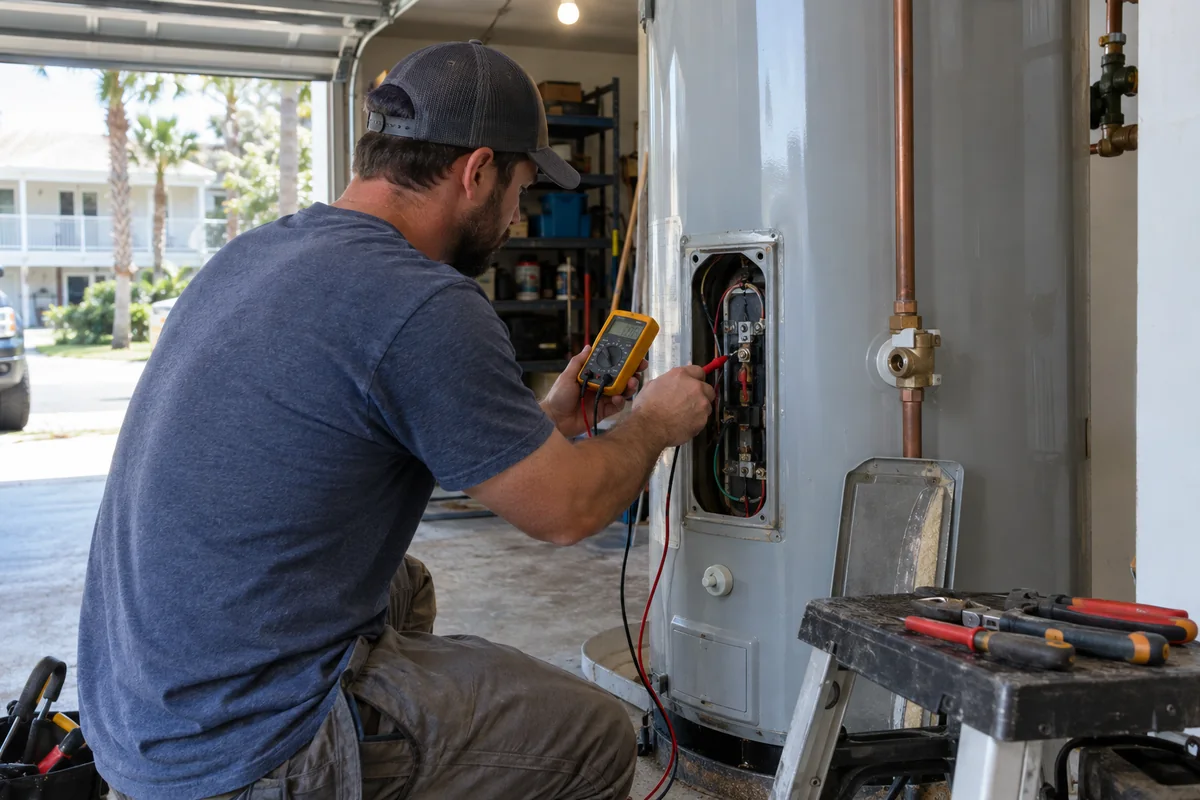
- No hot water: a failed heating element or thermostat on an electric unit; a pilot, thermocouple, or gas valve problem on a gas unit; or a tripped breaker.
- Not enough hot water: one failed element on an electric heater, sediment taking up tank space, or a broken dip tube.
- Leaks: from fittings and the drain valve (usually repairable), from the temperature and pressure relief valve (a pressure or temperature problem), or from the tank itself (replacement).
- Popping or rumbling: sediment on the bottom of the tank.
- Rusty or smelly water: a worn anode rod or tank corrosion.
Repair or replace?
Elements, thermostats, thermocouples, gas valves, drain valves, and relief valves can all be replaced. A tank that's leaking from the body cannot be repaired.
Age matters too. The U.S. Department of Energy puts the typical life of a conventional storage water heater at 10 to 15 years and a tankless unit at about 20 (Energy Saver). A big repair on a tank near the end of that range is often money better put toward a new one. Replacement usually requires a permit.
The relief valve is a safety device
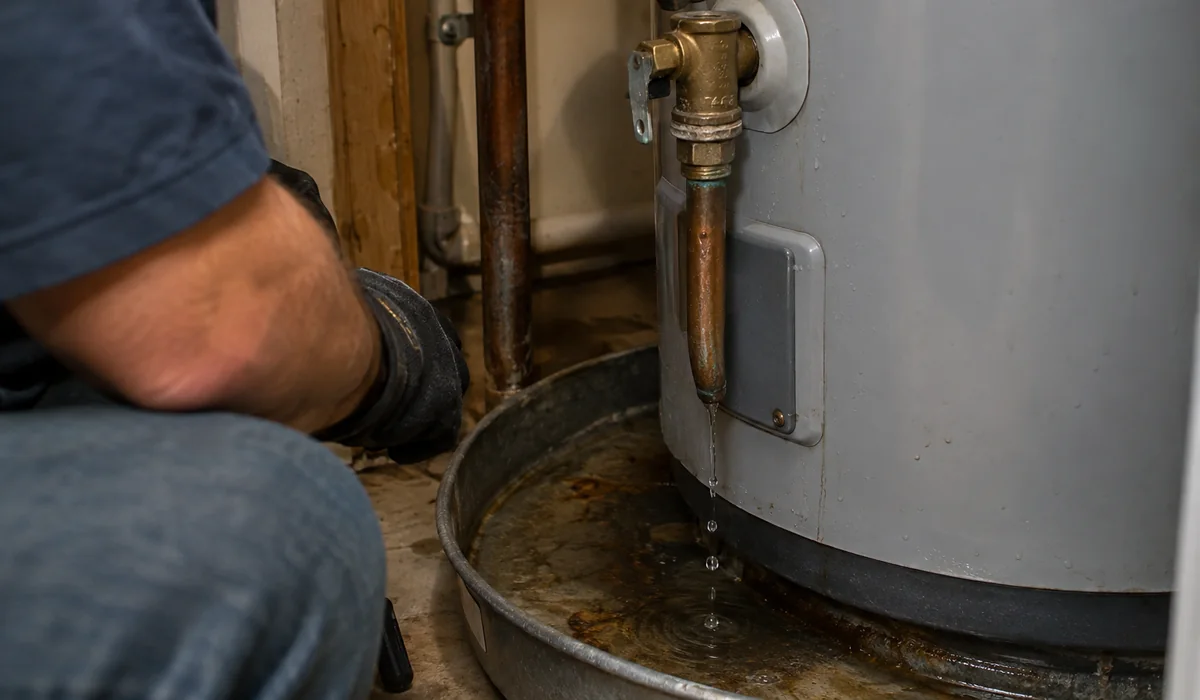
Every tank water heater has a temperature and pressure (T&P) relief valve that opens if the tank gets too hot or the pressure gets too high. Water dripping from its discharge pipe means it's doing its job or it's worn. Never cap or plug it. If it keeps discharging, call a plumber: the cause can be high water pressure, thermal expansion, or an overheating thermostat.
When to call a plumber
- Water is leaking from the tank or pooling around the base
- The T&P relief valve keeps discharging
- You smell gas near a gas water heater (leave and call the gas company first)
- The breaker for an electric heater keeps tripping
- No hot water after you've checked the breaker or relit the pilot per the label
- Rusty water from hot taps only
What water heater repair costs
HomeAdvisor's 2026 data puts water heater repair at $150 to $750 and installation of a new unit at $800 to $2,000 (HomeAdvisor, 2026). Element and thermostat replacements sit at the low end; gas valve replacements and tankless repairs cost more.
- Gas, electric, or tankless
- The failed part
- Location: a garage is easier than an attic or tight closet
- Whether code upgrades are needed at replacement, such as a drain pan, expansion tank, or venting
Safety and what to do while you wait
- Smell gas? Leave the house and call your gas utility or 911 from outside.
- For a leaking tank, shut off the cold-water supply valve on top of the heater.
- Turn off the power at the breaker for an electric unit, or set a gas unit's control to off or pilot.
- Don't touch the T&P valve or discharge pipe; the water can scald.
- Note the brand, model, and age from the label for the plumber.
Questions to ask the plumber
- Is your South Carolina plumbing license current? (Check it free on the SC LLR license lookup.)
- What's the service call fee, and is it credited toward the repair?
- Will you give me the price in writing before you start?
- Is this worth repairing, given the heater's age?
- If I replace it, does it need a permit, an expansion tank, or a drain pan?
- Is the part under the manufacturer's warranty?