
Skip to content

Independent referral service: calls connect you with participating South Carolina plumbing professionals. How it works

South Carolina Plumbing

General plumbing repair

Plumbing Repair in South Carolina

Leaky fixtures, low water pressure, running toilets, noisy pipes, and the everyday repairs that keep a house working. What they involve, what they cost, and when to call.

(843) 459-7066 · Referral to a participating independent plumber

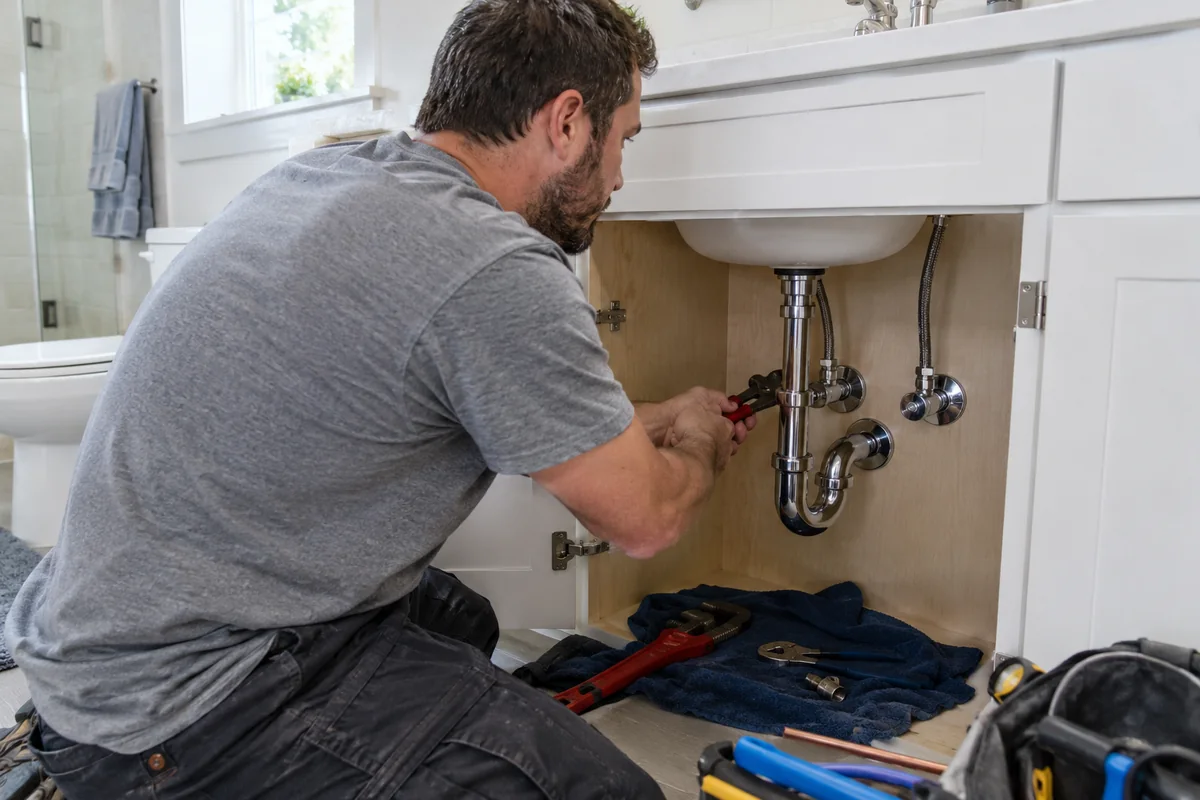
Plumber tightening a fitting on the supply lines under a bathroom sink

Last updated: 2026-10-10

South Carolina Plumbing is a referral service that connects South Carolina homeowners, landlords, and property managers with participating independent plumbing professionals. This page covers the everyday plumbing repairs that make up most service calls: what usually causes them, what a plumber does, and what affects the price.

Common plumbing repairs

Most service calls fall into a handful of categories:

  • Leaks at supply lines, shutoff valves, faucet connections, and drain traps under sinks.
  • Running or leaking toilets: worn flappers and fill valves, loose tank bolts, or a failed wax ring at the base.
  • Low water pressure at one fixture (often a clogged aerator or cartridge) or the whole house (a failing pressure-reducing valve, a partly closed valve, or old pipe).
  • Noisy pipes: banging when a valve closes (water hammer) or whistling from high pressure.
  • Fixture replacement: faucets, shutoff valves, toilets, and garbage disposals.
  • Outdoor plumbing: leaking hose bibs and frost-damaged exterior faucets.

Why small leaks matter

A slow drip is easy to ignore. The EPA's WaterSense program estimates the average household's leaks waste more than 9,300 gallons of water a year, and that nine percent of homes have leaks wasting 50 gallons or more a day (EPA WaterSense). Beyond the water bill, a leak inside a cabinet or wall rots subfloor and grows mold long before it shows.

Water pressure: what's normal

Residential water pressure is commonly kept between about 40 and 80 psi. Plumbing codes based on the International Plumbing Code call for a pressure-reducing valve when street pressure exceeds 80 psi, because high pressure stresses fittings, appliances, and water heaters. A plumber can test your pressure with a gauge on an outdoor faucet in a few minutes.

When to call a plumber

  • A leak you can't stop by tightening a nut or closing a fixture valve
  • Low pressure throughout the house, not just one faucet
  • A toilet that rocks, leaks at the base, or runs after you've replaced the flapper
  • Shutoff valves that won't close or leak when you turn them
  • Banging or whistling pipes
  • Any repair over $500, which in South Carolina requires a licensed plumber

What plumbing repairs cost

HomeAdvisor's 2026 data puts the average plumber visit at $341, with most between $182 and $501, and toilet repairs typically $100 to $300 (HomeAdvisor, 2026). Many plumbers charge a service call fee of $100 to $250 that covers diagnosis and often the first hour.

  • Whether the fix is a part swap or requires opening a wall or cabinet
  • Fixture and part prices you choose
  • Time of day: after-hours work adds $100 to $300 or more
  • Age of the plumbing: corroded valves and old pipe turn small jobs into bigger ones
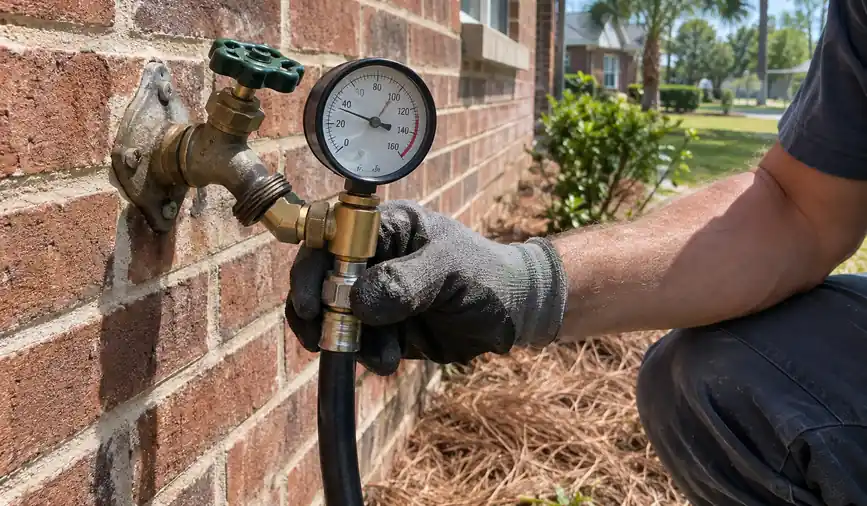
Plumber checking water pressure with a gauge on an outdoor hose bib

Safety and what to do while you wait

  1. Close the fixture's shutoff valve if it has one, or the main if it doesn't.
  2. Put a bucket and towels under active drips and empty the cabinet below.
  3. Turn off power to a garbage disposal or electric water heater before anyone works near it.
  4. Don't overtighten old plastic or brass fittings; they crack.
  5. Note when the problem started and what changed, which helps the plumber diagnose it faster.

Questions to ask the plumber

  • Is your South Carolina plumbing license current? (Check it free on the SC LLR license lookup.)
  • What's the service call fee, and is it credited toward the repair?
  • Will you give me the price in writing before you start?
  • Do you charge flat-rate or by the hour?
  • Should I replace this fixture or valve rather than repair it?
  • What warranty comes with the parts and labor?

Related plumbing guides

Straight comparison

DIY fix or call a plumber?

ProblemOften DIY-friendlyCall a licensed plumber
Clogged drainOne slow sink or tub: plunger or hand augerSeveral drains slow at once, gurgling, or sewage backing up: likely a main line problem
Running toiletFlapper or fill valve swapCracked tank or bowl, leaks at the base, or a toilet that needs resetting
Dripping faucetCartridge or washer replacementCorroded valves behind the wall, or a shutoff that will not close
Water heaterRelighting a gas pilot per the label, flushing sedimentLeaking tank, gas smell, tripping breaker, or a relief valve that keeps discharging
LeaksA loose compression nut under a sinkHidden leaks, wet walls or ceilings, a running meter with everything off, warm spots on a slab floor
Sewer lineNot DIYCamera inspection, root cutting, repair or replacement, and any required permit

South Carolina requires a licensed plumber for residential plumbing work over $500.

What to expect

What to expect when a plumber comes out

  1. Diagnosis

    The plumber finds the source of the problem: the failed part, the location of the clog or leak, or the reason the water heater stopped working. Expect questions about when it started and what you have noticed.

  2. Written price before work

    A good plumber explains what is wrong and gives you a price, either flat-rate or time and materials, before starting. Ask what is included and what could change it.

  3. Repair or replacement

    The plumber makes the repair, replaces the failed part, or, for bigger jobs like a water heater or sewer line, schedules the work and pulls any required permit.

  4. Testing

    Water is turned back on and the repair is checked for leaks, drainage, pressure, or hot water, depending on the job.

  5. Paperwork

    You get an invoice that lists the work and parts. Keep it, along with any warranty on parts or labor and any permit inspection record.

How the referral works

How our contractor-matching service works

  1. You call the number on this site

    Have the property's address or ZIP code ready, plus a short description of the problem: a leak, a clog, no hot water, a backed-up drain.

  2. Your call is routed to a participating plumber

    Your call is connected with a participating independent plumbing professional who serves your area, if one is available. We do not send a plumber ourselves.

  3. You deal with that plumber directly

    The plumber diagnoses the problem, quotes the job, and does the work under their own business name, license, and insurance. You decide whether to hire them; there is no obligation.

Good to know: availability depends on which participating plumbers cover your ZIP code and how busy they are, and not every plumber offers every service. Ask about their South Carolina license, insurance, written price, and timeline before work starts. Our plumbing guides cover what to ask.

Request Plumbing Assistance

Call and we will try to connect you with a participating independent plumber who serves your area.

Questions

General Plumbing Repair questions

Can I fix a leaky faucet myself?

Often, yes. Most drips come from a worn cartridge or washer, and replacement parts are inexpensive. If the shutoff valves under the sink won't close or the faucet body is corroded, call a plumber; South Carolina requires a licensed plumber for residential plumbing work over $500.

Why is my water pressure low?

If it's one fixture, the aerator or cartridge is usually clogged. If it's the whole house, common causes are a failing pressure-reducing valve, a partly closed main valve, a hidden leak, or old galvanized pipe narrowed by corrosion. A plumber can test pressure in minutes.

How much does a plumber charge for a small repair?

HomeAdvisor's 2026 data puts most plumber visits between $182 and $501, averaging $341. Service call fees of $100 to $250 are common and usually include the first hour. Ask for the price before work starts.

Does South Carolina Plumbing do repairs?

No. South Carolina Plumbing is a referral service. Your call is connected with a participating independent plumber who serves your area, if one is available, and that plumber does the work.

Call (843) 459-7066 · Get Help