
Last updated: 2026-10-10
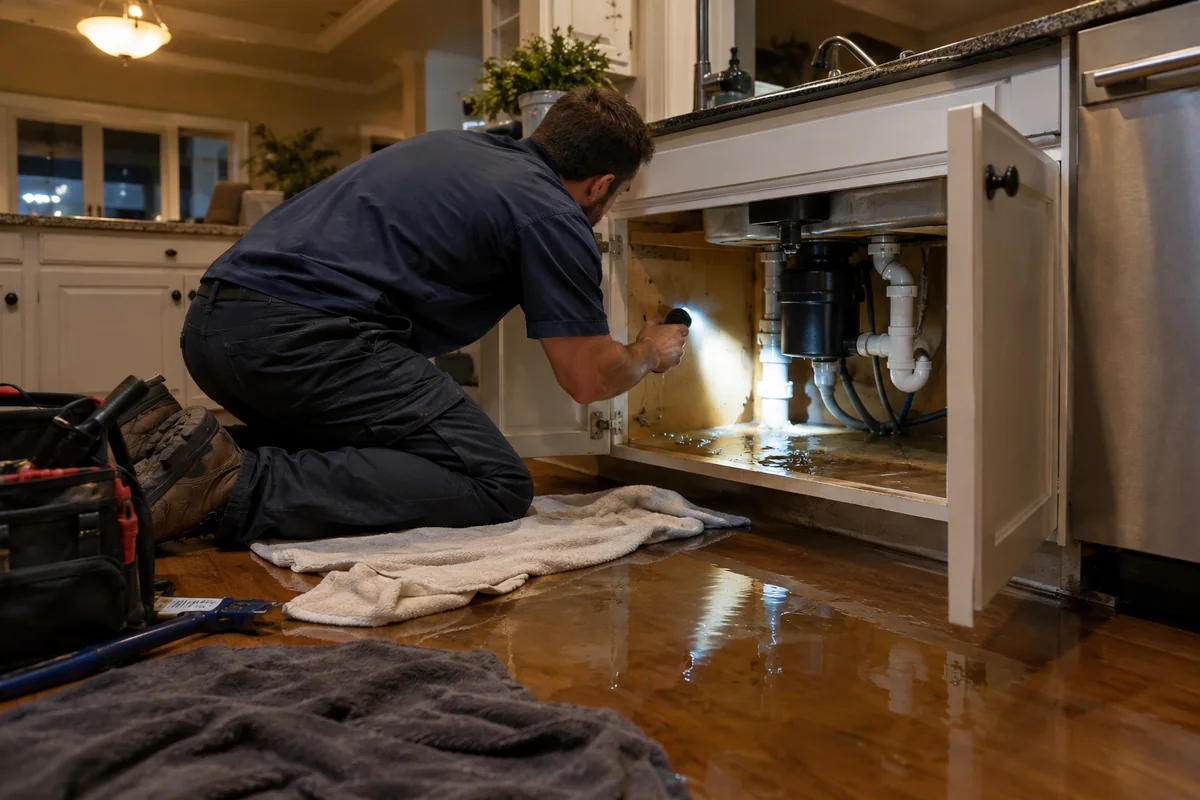
South Carolina Plumbing is a referral service that connects South Carolina homeowners, landlords, and property managers with participating independent plumbing professionals. This page covers what counts as a plumbing emergency, what you can do safely before a plumber arrives, and what emergency service typically costs.
What counts as a plumbing emergency
A plumbing problem is an emergency when waiting will cause damage, create a health hazard, or leave the home without water or sanitation. The common ones:
Not sure whether yours qualifies? Our plumbing emergency checker sorts it out in a few clicks and gives you safety steps for each situation.
- A burst or broken pipe spraying or pouring water, including a split supply line to a toilet, sink, or washing machine.
- Sewage backing up through a floor drain, tub, or lower-level toilet. That's a health hazard and usually means a main line blockage.
- A leaking water heater, especially water coming from the tank itself rather than a fitting.
- No water at all in the house when the utility reports no outage.
- An overflowing toilet that won't stop, or the only toilet in the house out of service.
- Water coming through a ceiling or a wall that's wet to the touch.
Common causes in South Carolina homes
Most emergency calls trace back to a handful of causes:
- Freezes. They're infrequent across much of the state, so pipes in crawl spaces, attics, garages, and exterior walls are often unprotected when one arrives. During the December 2022 freeze, Greenville County fire services handled nearly 100 calls for burst pipes and broken sprinklers in a single weekend (Fox Carolina).
- Failed supply lines and connectors under sinks and toilets and behind washing machines.
- Water heaters at the end of their life, when the tank corrodes through.
- Roots and old sewer pipe. Clay, cast-iron, and fiber sewer lines in older neighborhoods crack, separate, and fill with roots until a main line clog sends wastewater back into the house.
- Pressure spikes that stress fittings and old pipe.
What a plumber does on an emergency call
The first priority is to stop the damage: isolate the leak, cap a broken line, or clear a main line blockage so the house can drain. Once the immediate problem is under control, the plumber diagnoses the cause and gives you a price for the permanent repair. Sometimes that's the same visit; for bigger jobs like a water heater or sewer line replacement, it may be scheduled separately.
If water has soaked floors, walls, or ceilings, a plumber fixes the plumbing but usually doesn't dry the structure. That's a separate water damage restoration job.
When to call a plumber right away
- Water is actively leaking and you can't stop it at a fixture valve
- Sewage or dirty water is coming up any drain
- The water heater tank is leaking or you smell gas near a gas water heater (leave and call the gas company first)
- You have no water and your utility reports no outage
- You shut off the main to stop a leak and now have no water in the house
- A ceiling is wet, stained, or sagging below a bathroom or water line
What emergency plumbing costs
HomeAdvisor's 2026 data puts the average plumber visit at $341, with most between $182 and $501. Plumbers charge roughly $45 to $200 an hour depending on experience, and many charge a service call fee of $100 to $250 that usually covers the first hour (HomeAdvisor).
After-hours work costs more. HomeAdvisor lists after-hours surcharges of $100 to $300 or more. A burst pipe repair typically runs $200 to $3,000 depending on where the pipe is and how much has to be opened up to reach it.
- Time of day and day of week
- Where the problem is: an exposed pipe under a sink versus one inside a wall, ceiling, or slab
- Parts: a supply line versus a water heater
- Whether a permit is required for the permanent repair
Safety and what to do while you wait
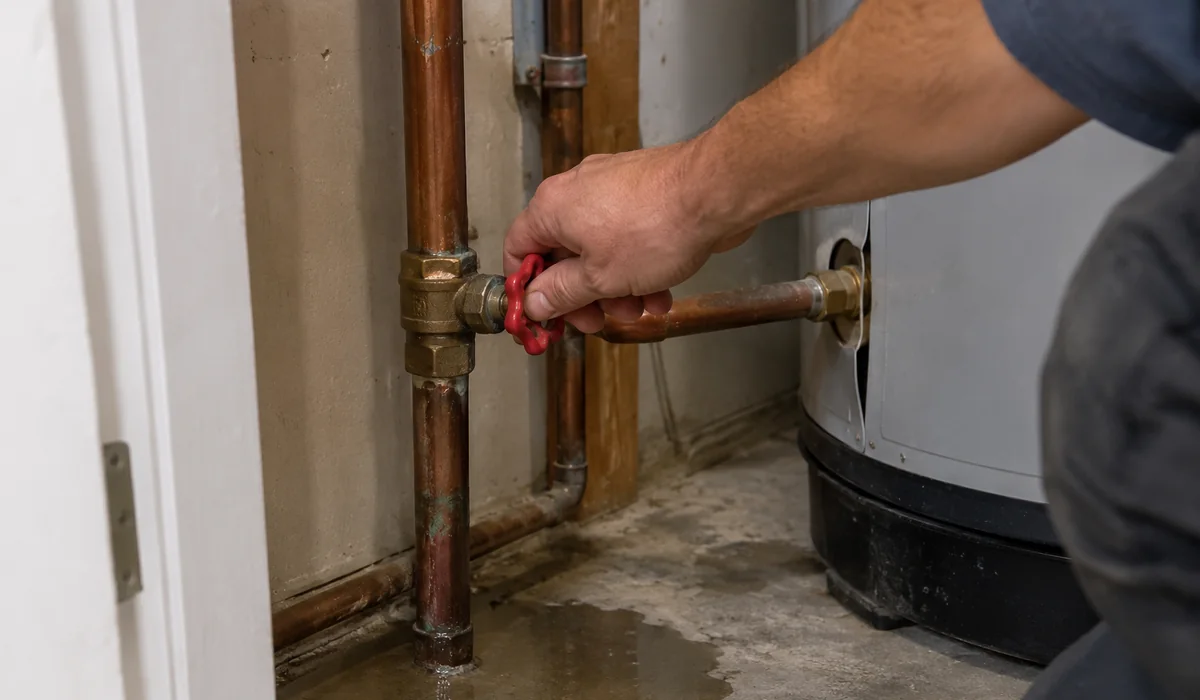
- Shut off the water. Use the fixture's valve if there is one. Otherwise close the main shutoff, usually where the line enters the house, in a utility closet or garage, or at the meter box near the street.
- Turn off the water heater if you've shut off the main for more than a short time: switch off the breaker for an electric heater, or set a gas heater to pilot.
- Keep away from electricity. Don't stand in water near outlets or appliances, and stay out from under a sagging ceiling.
- For a sewage backup, stop using water in the house, including flushing, and keep children and pets away.
- Smell gas? Leave the house and call your gas utility or 911 from outside.
- Take photos of the damage and the source for your insurer.
Questions to ask the plumber
- Is your South Carolina plumbing license current? (You can check for free on the SC LLR license lookup.)
- What's the service call fee, and does it include any labor?
- Do you charge a flat rate or by the hour, and what's the after-hours rate?
- Will you give me a price before starting the permanent repair?
- Does this repair need a permit?
- What warranty do you offer on parts and labor?