
Learn
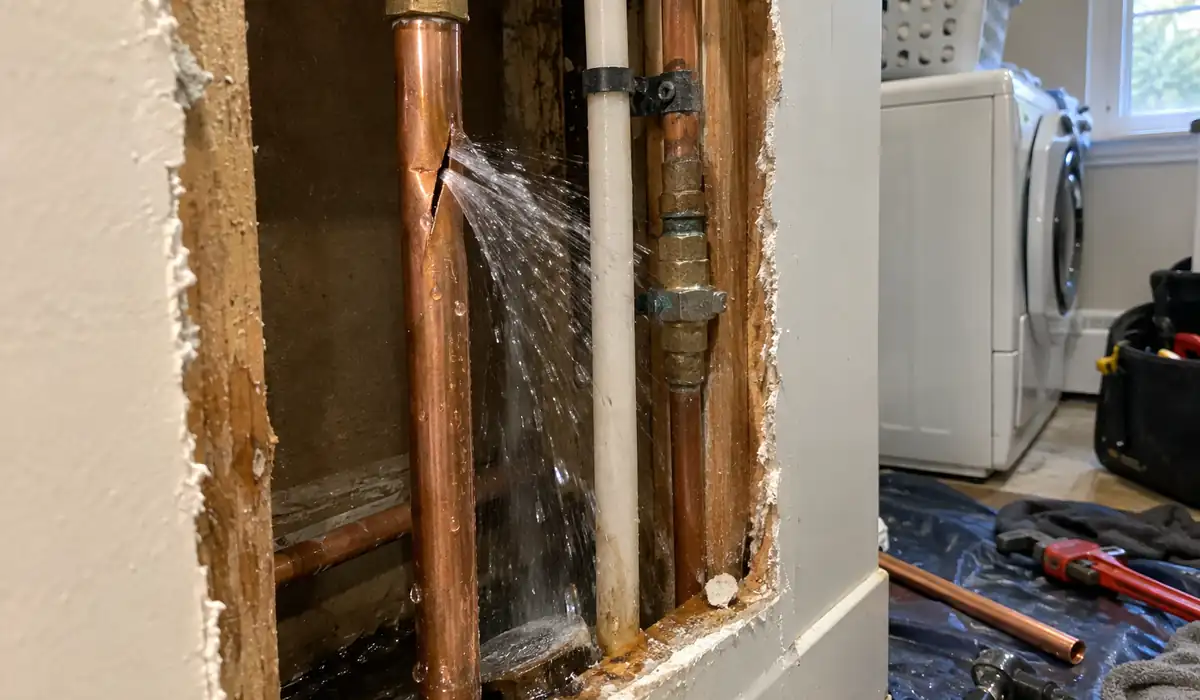
What should you do when a water pipe bursts?
What to do in the first minutes after a pipe bursts: shut off the water, protect yourself from electrical hazards, drain the lines, document the damage, and call a plumber.
Shut off the water right away, at the fixture's valve if the break is there, or at the main shutoff where the water line enters the house or at the meter box by the street. Turn off the water heater, open faucets to drain the lines, stay away from wet electrical fixtures and sagging ceilings, photograph the damage, and call a plumber.
Published 2026-10-10 · Updated 2026-10-10
South Carolina Plumbing is a referral service that connects South Carolina homeowners with participating independent plumbers. Whether you call anyone or not, these steps limit the damage from a burst pipe. Do them in order.
1. Shut off the water
Speed matters more than anything else. A broken supply line can release several gallons a minute.
- If the break is at a fixture (a toilet, sink, washing machine, or ice maker), close the small shutoff valve behind or under it.
- Otherwise, close the main shutoff. In South Carolina homes it’s usually where the water line enters the house: in the crawl space, garage, a utility closet, or near the water heater. Turn it clockwise until it stops.
- If you can’t find it or it won’t turn, use the valve in the meter box near the street. Some need a meter key; a pair of pliers or an adjustable wrench often works on the handle.
2. Make it safe
- Don’t stand in water near outlets, power strips, or plugged-in appliances. Turn off power at the breaker only if you can reach the panel without standing in water.
- Stay out from under a wet or sagging ceiling. Soaked drywall can drop without warning.
- If water is near a gas appliance or you smell gas, leave and call your gas utility from outside.
3. Turn off the water heater
With the main off, a tank water heater can be damaged if it keeps heating. Switch off the breaker for an electric heater, or set a gas heater’s control to “pilot” or “off.”
4. Drain the lines
Open the cold-water faucets at the lowest point in the house, then the rest, and flush toilets once. This drains the water still in the pipes and relieves pressure, so less water escapes from the break.
5. Document everything
Before you clean up, photograph and video:
- The broken pipe or failed part
- Wet floors, walls, ceilings, and belongings
- Any water stains spreading on ceilings below
Your insurer will want these. Keep any failed part the plumber removes.
6. Call a plumber, and your insurer if it’s more than minor
A plumber repairs the pipe. If water has soaked flooring, walls, or a crawl space, that’s a separate drying job, usually done by a water damage restoration company. Report significant damage to your insurer promptly; burst pipes are often covered as sudden and accidental damage, minus your deductible.
For what the repair may cost, see our South Carolina plumber cost guide: HomeAdvisor’s 2026 data puts burst pipe repairs at $200 to $3,000, depending on where the pipe is.
Why pipes burst in South Carolina
- Freezing. Hard freezes are infrequent across much of the state, so pipes in crawl spaces, attics, garages, and exterior walls are often unprotected. In the December 2022 freeze, Greenville County fire services fielded nearly 100 calls for burst pipes and broken sprinklers in a single weekend (Fox Carolina).
- Old pipe. Galvanized steel corrodes from the inside, and older plastic supply pipe can fail at the fittings.
- Failed connectors. Braided supply lines to toilets, faucets, and washing machines wear out.
- High pressure. Pressure above about 80 psi stresses fittings; plumbing codes call for a pressure-reducing valve above that.
Prevent the next one
- Insulate pipes in crawl spaces, attics, and exterior walls.
- Disconnect garden hoses before freezing weather.
- During a hard freeze, let faucets on exterior walls drip and open sink cabinets so warm air reaches the pipes.
- If a home will sit empty in winter, keep the heat on or shut off and drain the water. Vacant-home freeze damage is a common insurance exclusion.
- Replace braided supply lines every several years, and ask a plumber to check your water pressure.
If water is pouring out right now, our emergency plumbing page covers what a plumber will do when they arrive.
The bottom line
If you have a plumbing problem now, call (843) 459-7066 and we'll try to connect you with a participating independent plumber who serves your area. That plumber diagnoses the problem and quotes the job themselves.